The next big shift in computing, explained in plain English.
Short, honest explainers for curious people, business leaders and anyone who has nodded along in a meeting about quantum. No equations unless you ask for one.
Before you look, the qubit holds a blend of 0 and 1. The moment you measure, you get just one answer, and the blend is gone. Prepare the same qubit many times, measure each one, and the blend shows up in the counts.
Pick the path that fits why you're here
Each path ends with something to do, not just something else to read.
-
Path 1 · about 47 minutes
Understand quantum computing
For anyone curious, or anyone tired of nodding along in meetings.
- What is a qubit, really?
- Superposition and entanglement
- What quantum computers are good at
- Why your bank is already preparing
Then do this: test the next quantum headline you see with the five questions.
-
Path 2 · about 30 minutes
Understand post-quantum cryptography
For security, risk and technology people who need the threat and the fix.
- Harvest now, decrypt later
- Post-quantum cryptography for non-engineers
- Quick answers: ML-KEM, ML-DSA, hybrid key exchange
- Crypto-agility
Then do this: run the Mosca calculator for one kind of data your organisation keeps.
-
Path 3 · work at your own pace
Apply it in banking
For programme, risk, architecture and payments teams in financial services.
- Readiness self-assessment (20 questions)
- Quantum Readiness for Banking Professionals
- Post-quantum in Canada and the payments series
Then do this: fill in your first ten inventory records with the inventory template.
A learning path that builds one idea at a time
Each piece assumes nothing. The whole series takes about 47 minutes. Read them in order and you'll follow most quantum news by Friday.
- |1⟩
What is a qubit, really?
Coins, dimmer switches and why "both at once" is only half the story.
- |2⟩
Superposition without the hype
What it means to hold possibilities, and why you never get to see them directly.
- |3⟩
Entanglement in one coffee
Two qubits that answer together, and what that can and can't do.
- |4⟩
What quantum computers are good at
Chemistry, materials, certain maths problems. Also the long list of things they won't speed up.
- |5⟩
Why your bank is already preparing
The encryption problem, "harvest now, decrypt later", and the new standards replacing today's locks.
Latest
- Post-quantum in Canada: who has said whatThe federal roadmap, OSFI's bulletin and the other public documents, with whom each one binds and which dates are really in it.
- The certificate plumbing behind payment networksTrust chains, closed networks and chip cards: why certificates set the pace of post-quantum migration.
- What post-quantum cryptography changes in payment messagesOne cross-border wire, four layers of cryptography, and how quantum computing affects each one.
Also new: the Mosca calculator and quick answers on terms from Q-day to ML-KEM. See the full library →
Quantum Readiness for Banking Professionals
A free 8-chapter guide to preparing a bank for quantum-safe cryptography: what's at risk, building an inventory, deciding what to fix first, suppliers, governance and a phased roadmap to 2035.
Three things people get wrong
"It tries every answer at the same time."
A quantum computer can't just read out every answer. Measurement gives you one result. The skill is arranging the calculation so wrong answers cancel out and right ones get stronger.
"It will replace my laptop."
Quantum machines are specialists. Email, spreadsheets and video will stay on ordinary computers. Quantum helps with a narrow set of very hard problems.
"It's decades away, so it doesn't matter yet."
Encrypted data recorded today could be stored and unlocked later. That's why governments and banks are moving to new encryption now, years before a large quantum computer exists.
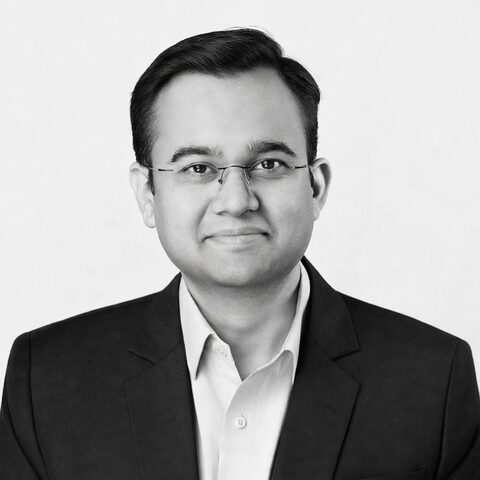
A payments professional who learned quantum the hard way, so you don't have to.
I'm Muhammad Atif. I've spent 15 years working in banking, most recently on a payments modernisation programme. Post-quantum cryptography is my enthusiasm on the side, and Plain Quantum is the guide I wish I'd had when I started learning it.